

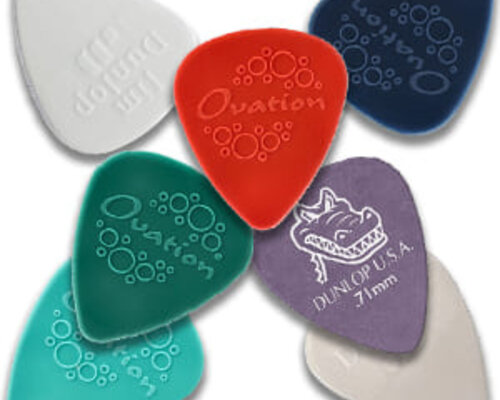
I have been playing guitar for more years than I care to remember, and throughout that time, the plectrum, commonly known as a pick or plec, has been an essential part of my playing. With so many different types of picks available, choosing the right one can be confusing. In this guide, I will focus on nylon guitar picks and explain which thickness works best depending on your playing style and experience level.

What Is a Nylon Guitar Pick?
A nylon guitar pick is known for its soft texture, flexibility, and comfortable grip. Compared to harder materials, nylon provides a smoother connection between your fingers and the strings, making it a popular choice for both beginners and experienced players.
Nylon picks come in many thicknesses, including:
- .38mm
- .48mm
- .60mm
- .73mm
- .88mm
- 1.0mm
- 1.14mm
Each thickness produces a different feel and response.
Nylon Pick Thickness Guide
The .38 mm pick is very light and flexible.
It is commonly used by:
- Beginner guitar players
- Advanced players who want to control volume while accompanying vocals or other instruments
Beginners often prefer this thickness because its flexibility makes strumming easier. It allows new players to focus more on chord shapes and fretboard accuracy without needing much picking strength.
The .48 mm pick offers similar flexibility to the .38 mm but provides a slightly firmer connection to the strings.
I would only use this thickness if:
- I had no other option
- I was playing a guitar with light gauge strings
When used on heavier strings, especially acoustic guitars with gauge 12 or 13 strings, this pick can feel uncomfortable. Heavier strings require more resistance to properly draw sound from the instrument.
The .60 mm pick is one of the most popular nylon pick thicknesses available.
It is favored by:
- Guitar players
- Banjo players
- Mandolin players
- Mandola players
- Bouzouki players
This gauge offers a firm feel while still allowing some flexibility. It adapts well to fast picking techniques, triplets, and dynamic playing styles. Because of this balance, it suits a broad range of players and instruments.
The Dunlop .60 nylon pick and Fender equivalents are considered standard stock in most guitar shops. In my experience, it is the most consistently sold pick at Music Minds.
Why Nylon Picks Are Popular
Nylon picks remain popular because they:
- Feel comfortable between the fingers
- Offer controlled flexibility
- Reduce hand fatigue
- Adapt to multiple playing styles
They are especially useful for players who value feel and control over aggressive attack.
Common Mistakes When Choosing a Pick
- Using a pick that is too light for heavy gauge strings
- Choosing flexibility when more control is needed
- Assuming one thickness works for every instrument
Testing different thicknesses is the best way to find what fits your playing style.
FAQs About Nylon Guitar Picks
Are nylon picks good for beginners?
Yes. Lighter nylon picks are flexible and forgiving, making them ideal for new players.
What is the most popular nylon pick thickness?
.60 mm is widely considered the most popular due to its balance of firmness and flexibility.
Are nylon picks good for acoustic guitars?
Yes, but thicker nylon picks work better with heavier gauge strings.
Do nylon picks wear out quickly?
They can wear faster than harder materials, but they offer better comfort and grip.
Can nylon picks be used for fast picking?
Yes. Medium gauges like .60 mm adapt well to fast picking and triplet patterns.
Try several nylon pick thicknesses and pay attention to how each one feels against your strings. The right pick should support your playing, not fight it.